The Gap Between What Leaders Say and Do
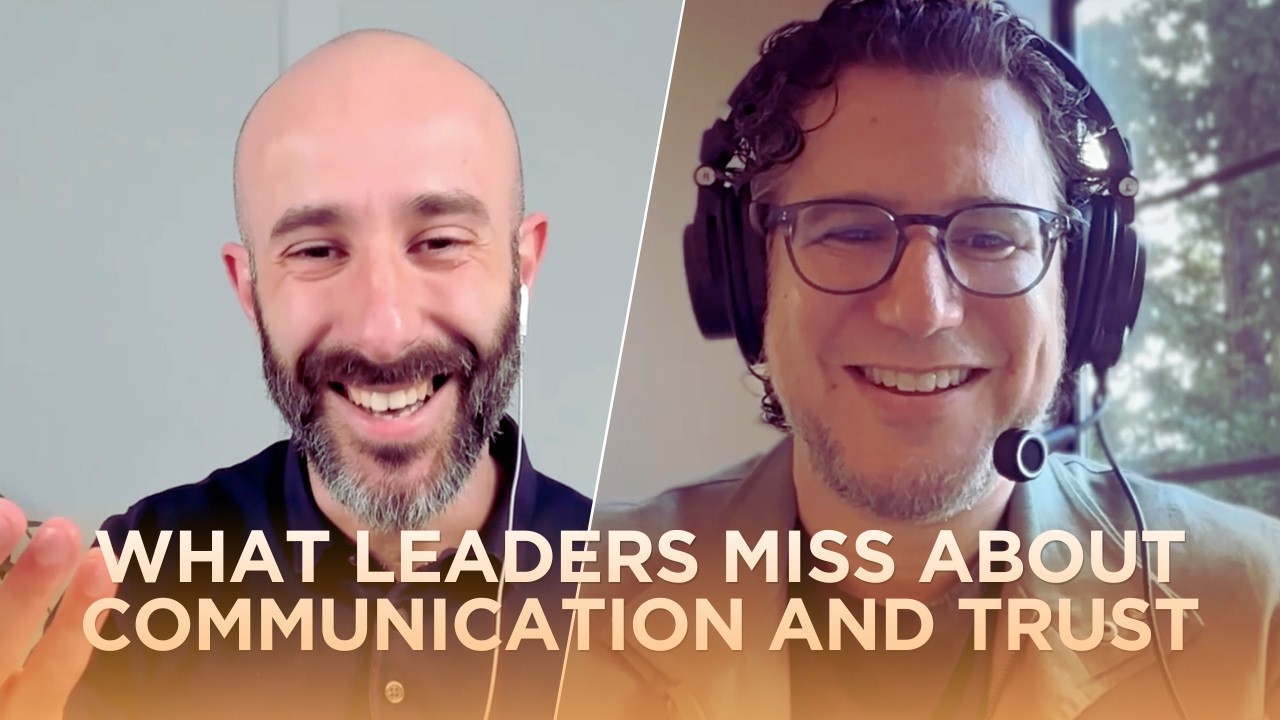
In this episode, Eric Ries explores why leadership communication often breaks down inside organisations. He explains how incentives, decisions and pressure shape what people believe – and how leaders can align their message with reality to build lasting trust.
Leaders spend a lot of time trying to communicate clearly.
They define a mission. They share values. They repeat key messages.
Yet inside many organisations, something doesn’t add up.
People hear the message. But they follow something else.
In a recent episode of the Ideas on Stage Podcast, I spoke with Eric Ries, author of Incorruptible, about why this happens – and what leaders can do about it.
This conversation goes beyond communication techniques. It looks at how messages take shape inside an organisation, and why clarity alone isn’t enough.
People follow signals
One of the key ideas from the conversation is simple:
People pay attention to patterns.
They watch what gets rewarded. They notice which decisions move forward. They see what happens under pressure.
Over time, these signals carry more weight than any message shared in a presentation or a company meeting.
Leaders often assume that if they explain the mission well, the organisation will align. In practice, alignment comes from what people experience every day.
If a company talks about long-term thinking but rewards short-term results, people adapt. If a company promotes quality but measures speed, teams adjust their behaviour.
This is where communication becomes visible. It shows up in choices, trade-offs and priorities.
Why purpose is hard to communicate
Many organisations invest time in defining purpose.
They craft mission statements. They write values. They communicate them across the business.
The difficulty comes when the environment sends mixed signals.
In the episode, Eric describes how leaders often operate within systems that push toward short-term outcomes. Investors, targets and internal metrics all influence decisions. These forces shape what people pay attention to.
As a result, leaders may communicate one direction while the organisation moves in another.
This is why purpose often feels clear at the top but less clear across teams. It’s not a question of wording. It’s a question of alignment.
You can’t control an organisation
Another important idea is how organisations behave.
Leaders often think of communication as a way to direct action. They expect that clear instructions will produce clear outcomes.
Eric offers a different perspective.
Organisations behave like living systems. They respond to conditions, incentives and interactions. Leaders can guide and influence, but they can’t control every outcome.
This changes the role of communication.
The goal is not to command behaviour. The goal is to create conditions where the right behaviour becomes natural.
That includes:
- Setting clear priorities
- Designing incentives carefully
- Reinforcing decisions that reflect the message
Communication plays a role in all of this, but it works alongside structure, not in isolation.
The power of simple language
In the conversation, Eric also explains why he avoids common business terms such as “culture” or “stakeholders.”
These words often carry many meanings. Different people interpret them in different ways. Over time, they lose precision.
Clear communication requires language that people understand in the same way.
He prefers words like “ethos” or “fiduciary” because they point to something specific.
For leaders, this is a useful reminder:
Simple language supports clear thinking. Clear thinking supports consistent action.
When actions define the message
One of the most powerful examples in the episode is the story of Cloudflare.
In its early days, the company didn’t have a formal mission statement. Yet employees shared a strong sense of purpose. They described it as “making a better internet.”
That idea didn’t come from a workshop or a document. It came from the decisions the company made.
At one point, the team chose to provide security support to vulnerable users, even when there was no financial upside. Later, they made encryption free, despite the impact on short-term revenue.
These decisions sent a clear signal.
Over time, the mission became obvious because people could see it in action.
For leaders, this shows how communication takes shape through behaviour.
Success brings new pressure
The conversation also explores what happens when companies succeed.
Many leaders assume that success will protect their mission. In reality, success attracts attention and pressure.
Investors expect higher returns. Markets push for faster growth. New stakeholders bring new priorities.
Eric shares the story of Sol Price, the founder of FedMart and a pioneer of modern retail. He built a company based on trust, fair pricing and long-term thinking. The business performed well, but external pressure grew.
Eventually, he lost control of the company. The principles that made the company strong were replaced by conventional practices. Within a few years, the business declined.
The lesson is clear:
As organisations grow, the environment around them changes. Communication becomes harder because more forces influence decisions.
This is when consistency matters most.
Trust as a leadership asset
The conversation ends with a simple idea.
Trust is one of the most valuable assets a company can build.
It develops over time through consistent behaviour. It grows when people see alignment between what’s said and what’s done.
It also attracts attention. When a company earns trust, it becomes more visible. More people want a share of its success.
This creates a new challenge for leaders: how to protect what they’ve built.
From a communication perspective, trust shapes how people receive messages. When trust is strong, communication becomes easier. When trust weakens, even clear messages struggle to land.
What leaders can do
For leaders who want to communicate with clarity and impact, a few practical ideas stand out from this conversation:
- Review what your organisation rewards
- Check if those signals match your message
- Use simple language that people understand in the same way
- Reinforce your message through decisions, not just words
- Pay attention to what happens under pressure
Communication doesn’t sit apart from the business. It runs through it.
Every decision sends a message. Every trade-off shapes perception. Every incentive guides behaviour.
When these elements align, communication becomes stronger.
Watch the full interview with Eric Ries to explore how leaders can align their message with actions, incentives and decisions – and build trust that lasts.

Want to learn more?
- Get a free copy of Timeless Presenter
- Take the Confident Presenter Scorecard to assess your presentation skills in less than 3 minutes
- Attend our free, live masterclass