How to Start Conversations That Lead to Business
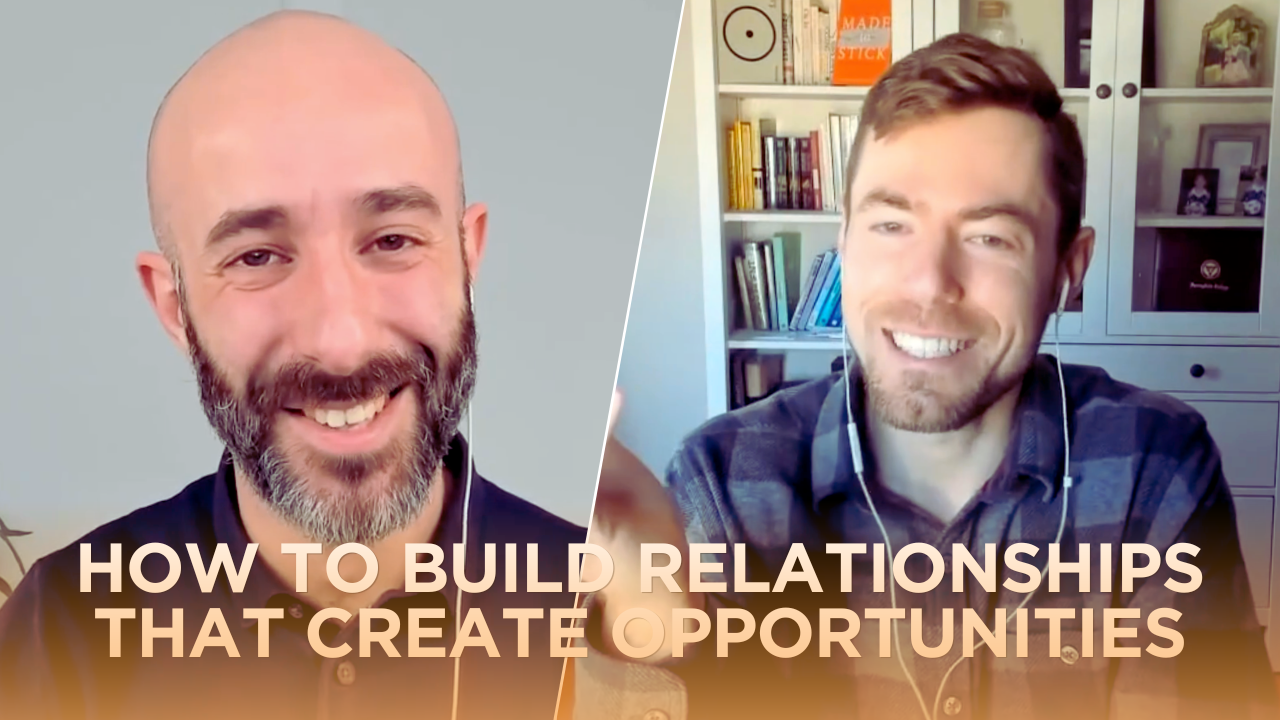
In this episode, Riley McGhee shares a simple framework to build relationships that lead to real business opportunities. Learn how to start better conversations, communicate your offer with clarity, and turn everyday interactions into meaningful client connections.
“At the end of your life, all you really have are the relationships you’ve built – and the stories you can tell.”
This idea came up at the end of my conversation with Riley McGhee. It stayed with me.
In business, we often focus on offers, messaging and growth strategies. Yet behind every opportunity sits a person. A relationship. Every client, every collaboration, every introduction starts with a conversation.
In this episode, Riley shares a simple approach to building those conversations in a way that feels natural and effective.
Why most outreach falls short
Many professionals struggle when they reach out to prospects or new contacts. The issue is not effort. It’s how that effort shows up.
Riley describes a common experience: receiving messages that feel generic, scripted or transactional. He calls this “getting pitch slapped.” The message jumps straight to a sale without building any connection.
People notice this. They feel it in the tone, the structure and the lack of relevance.
The result is predictable. The conversation never starts.
The alternative Riley proposes is simple: bring the same behaviour you would use in any normal human interaction into a business context.
Start simple.
Stay human.
Focus on the other person.
A simple framework: Intro, Interest, Invite
Riley breaks his approach into three steps: Intro, Interest, Invite.
1. Intro – Start with a real connection
The goal of the first message is not to sell. It’s to start a conversation.
Look for common ground. This could be a shared interest, a post, a group or a background detail. Riley calls these “breadcrumbs”. They give you a natural entry point.
Think of it as a chance encounter in a shop. You don’t open with a pitch. You react to something you both notice.
In client-facing situations, this matters. A strong opening sets the tone for everything that follows. When the first message feels relevant, people respond.
2. Interest – Build a real conversation
Once the conversation starts, the focus shifts to building interest.
Riley uses a simple structure: Parrot, Position, Prompt.
- Parrot – Reflect what the other person says. Use their words. Show that you’re paying attention.
- Position – Share something relevant from your experience. This adds context and credibility.
- Prompt – Ask a clear question that keeps the conversation moving.
This creates a rhythm. The other person feels heard and stays engaged.
A key idea here is presence. Many people think ahead to the outcome. They try to move the conversation towards a sale too quickly. Riley encourages a different mindset. Stay focused on the current exchange. Let the conversation develop.
For leaders, this applies to more than outreach. It applies to every client conversation, every meeting, every presentation. When people feel heard, they engage.
3. Invite – Move to the next step
At some point, the conversation reveals an opportunity – an entry point.
This is the moment to suggest a next step. It could be a call, a meeting, a webinar or another interaction.
The key is context. The invite should follow the conversation. It should feel like a natural progression.
In practice, this means you don’t push for the next step at the first opportunity. You wait until there’s a reason for it.
Why clarity matters when you present your offer
The conversation then moves to a related challenge: explaining what you do.
Many experts struggle to present their offer in a clear way. Riley links this to two common issues.
The first is overcomplication. When you know your field well, you tend to include too much detail. You explain features, processes and tools. The message becomes harder to follow.
Riley suggests a simple principle: simplify to clarify. Cut what’s not essential. Focus on what the audience needs to understand.
The second issue is the “curse of knowledge”. The more expertise you have, the harder it becomes to explain it in simple terms.
Clients don’t think in frameworks or methods. They think in problems and outcomes. They want to know what will change for them.
This is where language matters. Use the words your clients use. Reflect their concerns. Present your offer in a way they can recognise.
This applies to presentations too. Whether you speak to one person or a larger audience, clarity shapes how your message lands.
Why market insight shapes better communication
Another key idea Riley shares is the importance of listening to the market.
Many people create offers based on what they believe is valuable. They build in isolation. Then they struggle to explain or sell what they created.
Riley encourages a different approach. Talk to people first. Ask questions. Gather insights. Use those insights to shape your offer.
This has two benefits.
First, you create something that people recognise as relevant. Second, you gain the language you need to present it clearly.
This is practical for any leader who needs to communicate ideas. When your message reflects your audience’s reality, it becomes easier to understand and act on.
A story that shows the impact of one message
Riley shares a story from his early career.
He watched a talk by Mark Leruste that resonated with him. He decided to reach out. He researched, wrote a thoughtful message and followed up.
That message led to a conversation. The conversation led to a working relationship. That relationship opened doors to other opportunities.
Years later, that single outreach still shapes his network and career.
The lesson is clear. You can’t predict where a conversation will lead. But you can influence how it starts.
What this means for your communication
If your work involves clients, teams, people, these ideas matter.
Every important interaction starts with a conversation. Every conversation reflects how you show up. Every message shapes the opportunity that follows.
Riley’s approach focuses on simple behaviours:
- Start with something real
- Stay curious
- Use clear language
- Guide the next step
These principles apply whether you’re sending a message, leading a meeting or presenting an idea.
Communication is the way your work reaches other people.
And over time, those interactions build the relationships that shape your results.
Watch the full interview with Riley McGhee to explore how to build relationships that create opportunities – and how to apply these ideas in your client conversations and presentations.

Want to learn more?
- Join the early access list for the book Timeless Presenter
- Take the Confident Presenter Scorecard to assess your presentation skills in less than 3 minutes
- Attend our free, live masterclass