
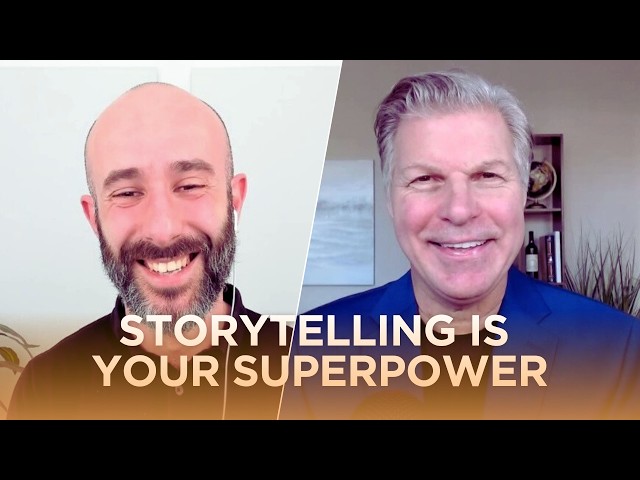
In this episode of the Ideas on Stage Podcast, Carmine Gallo shares how timeless principles of persuasion apply to modern business communication. You’ll learn how storytelling builds trust, how to create moments people remember, and how to communicate more effectively in client presentations and high-stakes conversations.
A few days after a presentation, most people forget most of what they heard.
That reality should change how we prepare for client conversations, pitches and key meetings. If people won’t remember everything, the goal becomes clear: decide what they should remember – and design your message around it.
In a recent conversation with Carmine Gallo, we explored what makes communication memorable and persuasive in today’s business environment. The tools may have changed, but the principles remain consistent.
The Principles of Persuasion Have Not Changed
Technology has introduced new formats – video, social media, AI – but the way people process information is stable.
Carmine points to Aristotle’s framework: ethos, logos and pathos. Credibility, logic and emotion still shape how people respond to ideas. In business settings, many professionals focus on data and logic. That creates clarity, but it rarely drives action on its own.
Emotion plays a central role. When people feel something, they pay attention and remember. Stories help deliver that emotional connection in a way facts alone can’t.
Storytelling Builds Trust
In client-facing situations, trust drives decisions.
One of the strongest ways to build trust is to share the story behind your work. That includes the challenges, the doubts, and the moments where progress felt uncertain.
Carmine shared the example of a founder who built a healthcare company after a personal medical scare at a young age. When she presented to investors, she focused on the technical aspects of her solution. An advisor encouraged her to include her personal story. That shift helped investors connect with her and trust her motivation.
The lesson is simple: people invest in people, not only in ideas.
Your experience gives meaning to your message. No one else can replicate it.
Use Struggle to Strengthen Your Message
Many professionals avoid talking about difficulties. They prefer to present a clean path to success.
Yet the moments that carry the most weight are often the hardest ones.
In storytelling, this is known as the “all is lost” moment – the point where the outcome feels uncertain. These moments create tension and draw people in. They also show resilience and problem-solving.
Airbnb offers a clear example. In its early days, the founders struggled to the point where they couldn’t afford milk for their Cheerios.. When they share that detail, it makes the story real. It allows the audience to relate and builds confidence in their journey.
For leaders, these moments can strengthen credibility. They show how you respond under pressure and how you move forward.
Engineer Moments of Attention
If people forget most of what you say, you need to decide what they should remember.
That requires intention.
Carmine describes this as engineering moments of attention. Instead of filling a presentation with information, focus on a few key moments that stand out.
One example comes from the early pitch of Square. The founders created specific moments designed to capture attention: they showed a bold slide listing 140 reasons the idea could fail, they asked investors to take out their credit cards and processed a live payment on the spot, and they demonstrated a small device that felt new and unexpected. These moments stayed with investors long after the presentation ended.
In practice, this means asking a simple question: which part of this conversation should stay with the audience tomorrow?
Your Story Follows a Pattern
Many effective communicators follow a structure without naming it.
The Hero’s Journey gives us a useful way to think about this structure. Every story begins in a familiar situation, introduces a challenge and leads to a transformation.
Carmine shared the example of the company behind NVIDIA. When the story is told, it often begins with a modest setting – early conversations in a diner – before moving through setbacks, failed products, and key decisions that shaped the company’s direction.
This pattern reflects how people experience progress. It helps audiences understand both the journey and the outcome.
In business communication, this structure can guide how you present your ideas. Start with the current situation, highlight the challenge and show the path forward.
Focus on Message Before Delivery
Many professionals focus on delivery – body language, voice and presence.
These elements matter, but they depend on the message.
Carmine and his team use a framework called AMP: Ability, Message, Practice. Ability refers to your natural strengths. Message focuses on the content you deliver. Practice builds confidence.
Message sits at the centre. When the message is clear and structured, delivery improves. When the message lacks clarity, delivery can’t compensate.
For leaders, this means spending more time shaping the story and less time adjusting slides.
Practice Builds Confidence
Confidence comes from preparation.
Effective speakers rehearse their message several times before presenting. They do it out loud, refine the structure and test it with others. Each repetition builds familiarity and reduces uncertainty.
In high-stakes situations, this preparation allows you to focus on the conversation rather than the next line.
Practice is part of the process for anyone who wants to communicate with clarity.
Use AI as a Tool, Not a Substitute
AI can support communication. It can help structure ideas, refine language and speed up preparation.
But it can’t replace your perspective.
It doesn’t have your experiences, your motivations or your understanding of the audience. These elements shape how people connect with your message.
Leaders who rely entirely on AI risk sounding similar to others. Those who use it as a tool can improve efficiency while keeping their voice.
A Clear Takeaway
Across all these ideas, one principle stands out:
Storytelling remains one of the most effective tools in business communication.
It helps people understand, remember and trust your message.
For leaders who present ideas, influence decisions and build relationships with clients, this is a practical advantage.
When you prepare your next presentation, start with one question:
What’s the story you want them to remember?

Want to learn more?
- Join the early access list for the book Timeless Presenter
- Take the Confident Presenter Scorecard to assess your presentation skills in less than 3 minutes
- Attend our free, live masterclass